
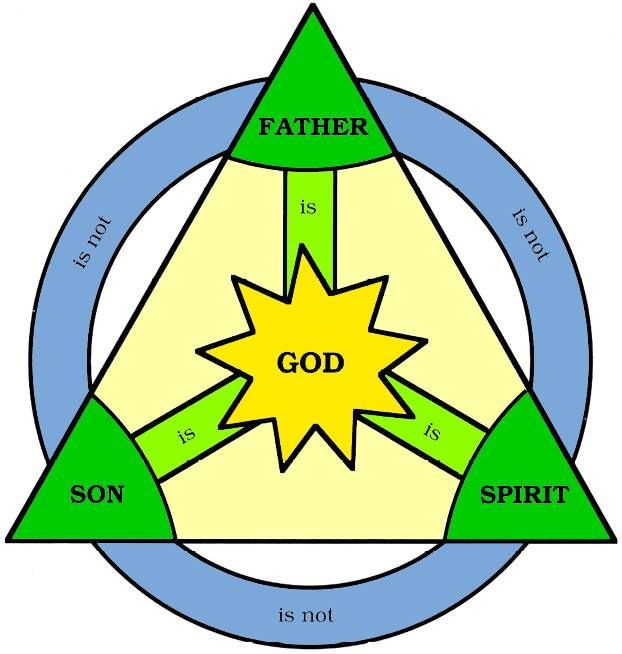
“God is not something vague… He is tangible;
He is not abstract but has a name: God is love.”
~ Pope Francis.
Most African traditional religions believe there is a supreme God who works with other intermediary deities or gods. He is conceived as creator of the Universe, omnipotent and omniscience. Christianity, Islam and the Jewish religions are generally called monotheistic religions, because they profess one God.
Historically, Arabs and Jews had several gods. Before the introduction of Islam, Arabs believed and worshipped Hubal and his goddess daughters: al-Lat, al-Uzza, and al-Manat. Similarly, Jews believed in many other gods before Abraham encountered Yahweh. Among these gods was the goddess Asherah (2 Kings 21 and 23) and Baal (1 Kings 18). Exodus Chapter 34 shows Moses pleading on behalf of Israel because the people deviated from Yahweh and began to serve a man-made god.
The prophets spoke against worshipping other gods and insisted that the people must remain faithful to Yahweh. Israel’s belief in one Yahweh is summarized in what they call the Shema in the book of Deuteronomy:
“Listen, O Israel! The Lord is our God, the Lord alone. And you must love the Lord your God with all your heart, all your soul, and all your strength.”
~ Deuteronomy 6:4-9
The Jews believe God is Father of all creation (Deuteronomy) and they are His first-born children. (Exodus 4:22)
Christians believe in the Holy Trinity, which is one God, operating in three persons – Father, Son and Holy Spirit. The Christian Creed (Credo) is a summary of this belief. It says:
I believe in one God, the Father Almighty.
I believe in Lord Jesus Christ, the only-begotten Son of God.
And I believe in the Holy Ghost, the Lord and Giver of Life;
A scriptural passage that provide some insight about the nature of God as Trinity is what is known as the Triadic Benediction:
“The Grace of our Lord Jesus Christ, the love of God and the fellowship of the Holy Spirit be with you.”
~ 2 Corinthians 13:14
Therefore, the Father is Love, the Son is Grace and the Holy Spirit unites (fellowship). Furthermore, the introduction of Gospel of John clearly shows the divinity of Jesus:
“In the beginning was the Word, and the Word was with God, and the Word was God.”
~ John 1:1
Also consider the “Golden text” of the Bible, John 3:16, where Jesus said to Nicodemus:
“God so loved the world that He gave His only Son, so that everyone who believes in Him might not perish but might have eternal life.”
Even though the scriptures reveal who God is, the human mind cannot fully comprehend the depth of God, and this is why John Wesley said:
“Bring me a worm that can comprehend a man, and then I will show you a man that can comprehend the Triune God.”
The Catechism of the Catholic Church adds:
“The Trinity is a mystery of faith in the strict sense, one of the mysteries that are hidden in God, which can never be known unless they are revealed by God.”
~ CCC 237
The doctrine of the Holy Trinity shows how near God is to His people, and so He is called Father. He took flesh to live and work among His people, and continues to support His people through the power of His Spirit. He is present through His love; He is present through the grace of His Son, and empowers His people through His Spirit dwelling in hearts.





2 thoughts on “The Holy Trinity and One God”
John 17:10-13, “and everything of Mine is yours and everything of yours is mine…….I am coming to to You. Holy Father, keep them in your name you have given me, so that they may be one just as we are. When I was with them I protected them in your name that you gave me….” Do you agree that the name the Father gave Jesus was “Jesus” and it was the Father’s name also? Catechism of the Catholic Church at 2666, “the Name Jesus contains all, god and man and the whole economy of creation and salvation”. Does it therefore contain the entire will of God for time and space?
Thank you Douglas for the questions regarding the name of Jesus.
Catechism of the Catholic Church states, “At the Annunciation, the angel Gabriel gave him the name Jesus, as his proper name, which expresses both his identity and his mission.” (CCC 430). Furthermore, the Catechism tells us “The name “Jesus” signifies that the very name of God is present in the person of his Son…” (CCC 432). Therefore, His name, His person and His mission embodies the will of God.