
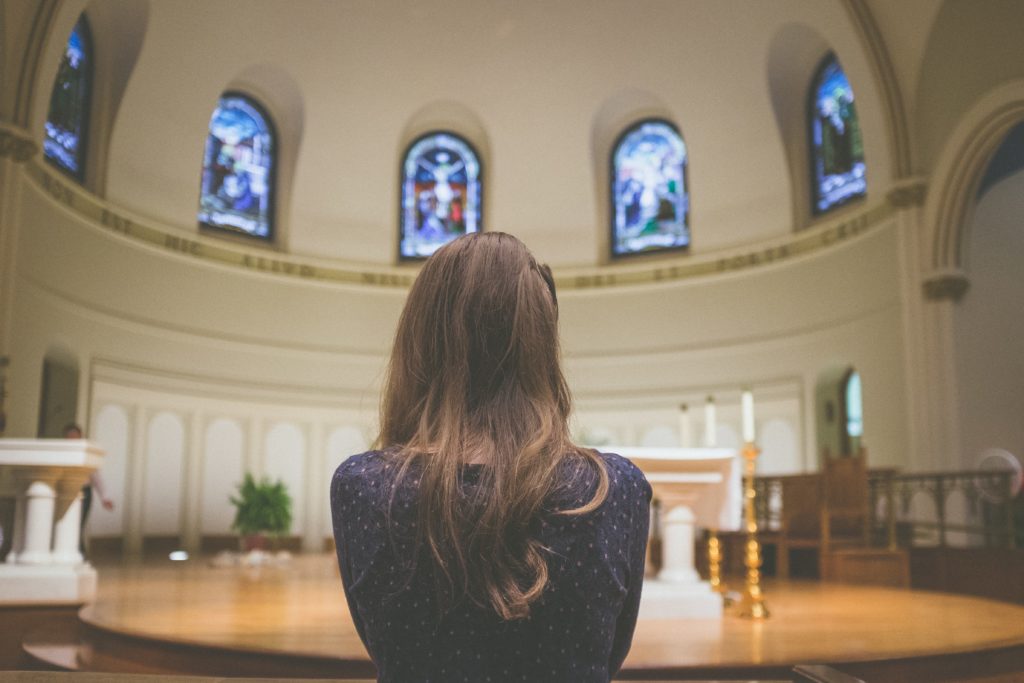
We relate to God through prayers, and these prayers can be personal or communal. A typical example of personal prayer is found in the Gospel of John 17, where Jesus had a lengthy prayer to God. A good example of a communal prayer is when the disciples of Jesus gathered in the Upper Room to wait and pray for the descent of the Holy Spirit. (Acts of the Apostles 18:9-18)
There are times when we get so absorbed in our personal prayer and we find communal prayers less attractive; at other times we get so absorbed in communal prayers and forget that personal prayers is as important. We can draw some insight from the personal prayer of Jesus and the communal prayers of His disciples.
PERSONAL PRAYER OF JESUS
The prayer of Jesus in the Gospel of John is known by various titles: ‘High Priestly or Sacerdotal Prayer,’ ‘Jesus’ Solemn Prayer,’ ‘Prayer of Christ’s Consecration or Offering,’ (referring to Jesus offering himself to death), ‘Jesus’ Intercessory Prayer,’ ‘Jesus’ Solemn Prayer.’ This John 17 prayer is also called ‘Prayer for Unity,’ or ‘Prayer of the Hour of Jesus.’ No matter what title this prayer is given, it is a personal prayer, which Jesus offers to His loving Father. In the prayers He speaks intimately to His loving Father. Noticeably, it was not a general prayer, but a prayer for a specific people and with a special focus. After asking for His glorification, Jesus prayed specially for His flock: “I pray for them; I am not praying for the world but for the ones You have given Me, for they are Yours; all Mine are Yours, and Yours are Mine and I am glorified in them.” (John 17:9-11) This personal prayer of Jesus took place after the Last Supper, just before the death of Jesus.
Jesus teaches us the importance of personal prayer. He prayed constantly, He prayed personally (conversing with His Father) and He prayed communally (in union with others). Scripture commentator Vima Dasan distinguishes between habits of prayer and spirit of prayer. He says,
“We will have the spirit of prayer if our prayer is turning of our minds and hearts to God, a heart to heart conversation with Him, an attitude of waiting and attending to Him, a personal relationship with Him which can be continuous even when we are engaged in other activities.”
Even though Dasan does not explicitly define habit of prayer, it is implied in his explanation of the spirit of prayer. It goes without saying that habit of prayer is when prayer becomes a mere routine and when it is turning out to be more mechanical than a heart-to-heart conversation with God.
COMMUNAL PRAYER
After the ascension of Jesus, the disciples returned from Mount Olivet to Jerusalem. They came together, prayed together and waited together for the coming of the Holy Spirit. Those who were in this group prayer were:
“Peter and John and James and Andrew, Philip and Thomas, Bartholomew and Matthew, John the son of Alphaeus and Simon the Zealot and Judas the son of James.”
The author of the Acts of the Apostles may have mentioned names of those who were in the group prayer to show that all the Apostles were present, except Judas Iscariot who betrayed Jesus. The author goes on to point out that this prayer group was not just made up of men, but also some devoted women. The author only mentioned the most prominent woman in the group, Mary, the Mother of Jesus. Notably, this group did not just consist of men and women, but also of clerics (the Apostles) and laypeople (the women and relations of Jesus). What is also significant in this gathering was that
“With one accord they devoted themselves to prayers.”
~ Acts of the Apostles 1:14
When we gather for the Holy Mass or other liturgical prayers, we do so in order worship God collectively in spirit and in truth. Jesus speaks strongly in favor of communal prayers:
“If two of you agree on earth (one accord) about anything for which they are to pray, it shall be granted to them by My heavenly Father. For where two or three are gathered together in My name, there am I in the midst of them.”
~ Matthew 18:19-20
I observe that many families find it difficult to pray together, even when it is clear that praying together yields greater results. A Latin proverb says, Prayers travel faster when prayed in unison.
CONCLUSION
As we prepare for the celebration of Pentecost next Sunday, let us pray for the outpouring of the Holy Spirit upon us. May we receive the spirit of wisdom, knowledge, understanding, fortitude, counsel, piety and fear of the Lord. We earnestly ask the Spirit to come and empower us in our weakness, to open our eyes to see more clearly, our ears to listen more closely, to transform our minds and to enkindle our hearts to love Him and our neighbors more dearly. May the Holy Spirit continue to renew and revive our drooping spirits.
___
7th Sunday of Easter, Year A; Acts of the Apostles 1:12-14; 1 Peter 4:13-16; John 17:1-11




2 thoughts on “Personal and Communal Prayer”
Thanks so much Fr.Gerald for sharing !
I have benefited from the explaination on the personal and communal prayers! With your permission allow me share the same with my brothers,sisters,friends,workmates in other platforms to which i subscribe!
Yes, you can share his article wherever you please =) Blessed Whitsuntide!