
In her autobiography, St. Therese of Lisieux wrote that prayer is “a raising of the heart, a simple glance towards Heaven, an expression of love and gratitude in the midst of trial, as well as in times of joy.” (1) This beautiful exposition reveals the heart of what it truly means to pray, and as a Doctor of the Church, St. Therese’s words hold a great spiritual authority when it comes to matters of prayer and spiritual growth. We learn from Therese that prayer does not need to be a formal process – this “simple glance” can take place at any moment of the day. In fact, this is really the only kind of prayer that allows us to faithfully follow St. Paul’s exhortation to “pray without ceasing” (1 Thessalonians 5:17, NABRE).
With that being said, there is a danger in assuming that we can live up to this ideal of praying always without some sort of scheduled prayer time structured into our lives. As a youth and young adult ministry leader, one of my primary responsibilities is the spiritual formation of those I minister to. And so, a question I often ask our young people and their parents is: “how is your prayer life? What does prayer look like for you?”. Typically, when I ask this for the first time I either get a blank stare or an answer along the lines of, “oh I pray throughout the day” or “at church”. But when I ask them to share a little bit more or explain what they mean or what their prayer looks like, they are often at a loss for words.
Of course, this isn’t true for everyone I speak to. There are many teens and families who have inspired me over the years with their radiant faith, robust prayer life, and love of Jesus and his Church. However, it does seem that for many, there is a disconnect regarding the life of prayer and the life of discipleship. And to be clear, I don’t fault our families or young people for this. The reality is that we as a church need to do a better job spiritually forming those we minister too. As important as intellectual formation is, it is only one component within the broader process of evangelization and catechesis. The Catechism teaches that the aim of catechesis is “putting people in communion with Jesus Christ” and that “at the heart of catechesis we find, in essence, a Person, the Person of Jesus of Nazareth.” (2) It is not purely an intellectual endeavor.
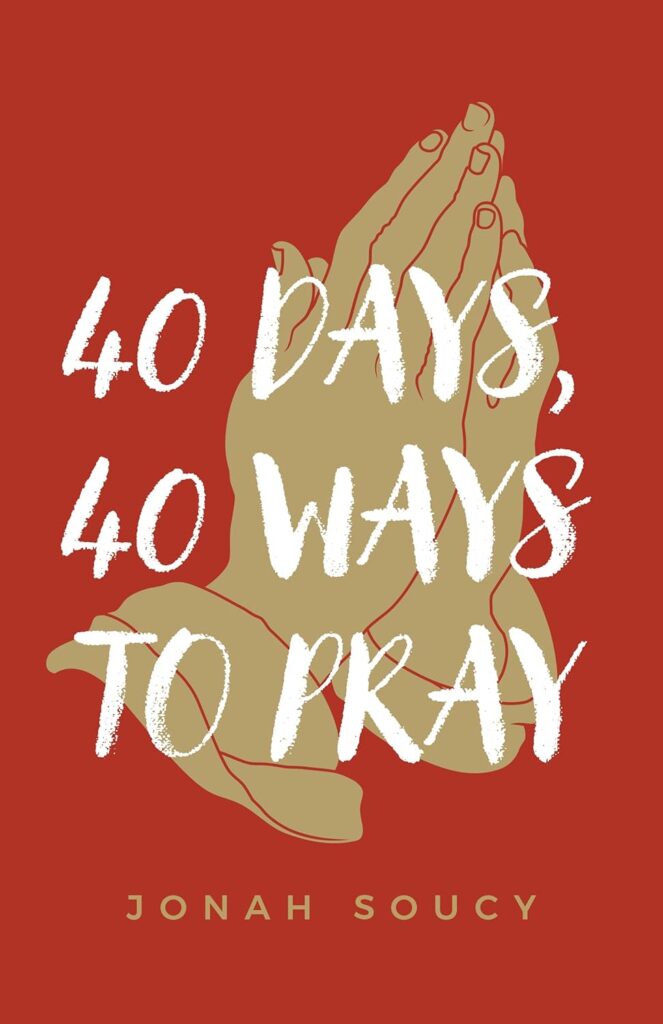
In my book, 40 Days, 40 Ways to Pray, I define prayer simply as our relationship with God. Like any other relationship, we need to set aside time for our relationship with God if it is to thrive. It’s simply not enough to think of Him from time to time or go to Mass once a week. As a Carmelite sister, St. Therese would have devoted several hours a day to prayer. It was because of this time spent in intentional prayer, that she was able to master the art of praying constantly.
But what exactly does this intentional prayer look like? Leaning on the traditional understanding of the three expressions of prayer being Vocal Prayer, Meditative Prayer, and Contemplative Prayer (4), I posit the following:
“Prayer consists of three major movements: talking to God (Vocal Prayer), listening to God (Meditation), and being with God (Contemplation). A healthy prayer life will consist of all three of these movements – each of the three expressions of prayer is vital for a healthy relationship with God. This makes perfect sense, as each of these is crucial for any other relationship in our life. The quality and depth of our relationships is based on how well we talk with, listen to, and spend time around each other.” (3)
Talking to God, Listening to God, being with God; these three “movements” of prayer are the key to unlocking a much greater sense of peace and purpose in our lives. When we draw close to God in prayer, we become more like him. Our hearts are molded to more closely resemble His Heart. We begin to change and grow in wisdom, and we experience a greater ability to love God and neighbor.
I wrote 40 Days, 40 Ways to Pray to help Catholics kickstart or take their life of prayer to new depths, and to introduce them to the many wonderful methods of prayer that have been passed down in the Church’s tradition. My hope (and prayer!) is that it meets the pressing need in the church to form spiritual disciples of Christ who not only know about him, but exist in a loving relationship with him.
When you begin your 40 Day prayer journey, you will learn 40 methods of prayer than come from the Church’s tradition. In addition, you will also learn about the various Catholic spiritualities from which these prayer methods sprang up, as well as a plentitude of practical advice such as what to do when you hit “dry spells” in prayer or are tempted to give up. Most importantly, you will hopefully experience a greater peace and freedom in coming to know God more deeply as you learn new ways of speaking with Him, listening to Him, and being with Him.
- Story of a Soul by St. Therese of Lisieux. Saint Benedict Press, TAN Books. Charlotte, North Carolina 2010. Translated by Michael Day. pg. 141
- Catechism of the Catholic Church, paragraph 426
- 40 Days, 40 Ways to Pray by Jonah Soucy, Sophia Institute Press
- Catechism of the Catholic Church, paragraph 2699
Author Bio: Jonah Paul Soucy
Jonah Paul Soucy is a Catholic speaker, musician, and author who hails from the wonderful Catholic community of Pittsburgh, Pennsylvania. At a young age, Jonah first experienced God in the beauty of the White Mountains of New Hampshire, the state where he grew up. As he grew older, he experienced God more fully through encountering Him in the Eucharist and in prayer.
Currently serving as a Youth Minister in the Diocese of Pittsburgh, Jonah recently received a Masters Degree in Catechetics and Evangelization from Franciscan University. He lives in the South Hills of Pittsburgh with his wife, Shannon, and his son.
When he’s not doing ministry, you can find Jonah spending time with his family, hunting, fishing, playing chess, learning a language, or reading a philosophy or theology book while enjoying a glass of bourbon or scotch.




2 thoughts on “Making Time for Prayer”
Pingback: Waiting For It, Was Martin Luther Right About Indulgences, 33 Books to Build a Family and Home, and More Great Links! - JP2 Catholic Radio
Pingback: Waiting For It, Was Martin Luther Right About Indulgences, 33 Books to Build a Family and Home, and More Great Links!| National Catholic Register – Catholic Mass Online Search