Aristotle teaches that “definition” is the first act of the intellect when constructing arguments or seeking to even understand. Now to The Philosopher, definition was derived from the essential properties of something – that is – its nature. There was no freedom to fantasize about the definition of the nature of something, but rather some critical observations had to go into it. For instance, the essence of a triangle – what is it? Some might say that it’s angles add up to 180 degrees. However, Aristotle would say that this was a non-essential characteristic of the triangle. Thus, those who defined it as such were more familiar with its non-essential dimension than its actual nature. An accidental nature can definitely be the same as a necessary one, but for Aristotle the fact that it was a three-sided, enclosed object, that is what defined it as a triangle and through that, gave rise to its 180 degrees worth of angles.
Now lets apply this to the spiritual life. Jesus asks “who do you say that I am.” He doesn’t just ask his disciples, he specifically is asking His Church. How would she answer? What is the essential aspect about Jesus? That He is the Christ – He is the Son of God. Its true that there are consequences that necessarily flow from this – and they should be known. Nonetheless we must start with what is most essential about Jesus.
In some ways – by way of observation and in discussion with some really wise people – the Church has a tendency to focus on the accidentals (non-essentials) without ordering their necessary aspect to what is essential. We live for the angles of a triangle rather than the shape which causes those angles. This means the spirit isn’t present in what we do – and this might rightly be called “maintenance.” So the external shape may occur anyways, but not for the right reasons. Think of that in terms of a relationship now: we love what a person produces, rather than the person. In this sense, we do not know the nature of the Church, Christ or her mission if we are first preoccupied with the non-essentials.
So let’s dig into this a bit deeper – lets get uncomfortable with the subject. What are the essentials to the spiritual life? Love. But what is that? How is it defined? Love of whom? Love of God? Love of neighbor? Which is first? Why is Love of God first? Does our love of neighbor flow from this as a consequence? What are the necessary consequences of loving God first in a fallen-state?
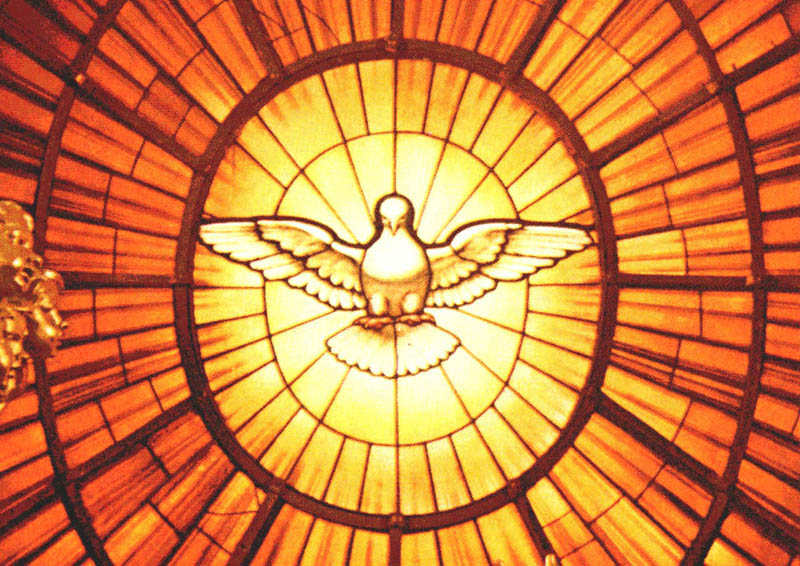
This is why – I believe it is utterly fundamental to not distract ourselves with accidental aspects of the faith until we are first certain that the fundamentals: both spiritual, virtue, intellectual, are taken care of. Any good coach will not approach a subject with lofty ideals, but will develop the foundation-blocks before building off of them. So must the Holy Spirit, the Church’s coach, Counselor, Guide and Lord, discipline us in defining the Church and her mission in relationship to Christ.
Photo: Public Domain