

Psychology, neurology, and mental health/illness are often some of the most misunderstood disciplines in Catholic circles. Many faithful Catholics are correctly and understandably wary of a discipline that has often led many astray.
I would argue that, in many cases, they are quite right and deservedly anxious about accepting the psychological corpus unreservedly. The great father of modern psychology, Sigmund Freud, was termed a “master of suspicion” by John Paul II in his Theology of the Body addresses, so clearly, there is cause for trepidation. However, the Church has always been willing to find the “seeds of the word” in the fruits of rational exercises. As once She struggled with Hellenization of Her articulation of doctrine through the adoption of philosophy as the handmaiden of theology including, famously, with the phrase “transubstantiation,” a clearly Aristotelian concept which would have been unthinkably Greek to many theologians, I believe that the fields of theology and spirituality will continue to benefit greatly through the incorporation of the findings of psychology, particularly with respect to the functioning of the human brain. To understand Christ is to understand who man is, and a proper anthropology will account for and humbly accept the scientific progress made with respect to just how powerful and important the brain is with respect to human action.
Where psychology becomes a purely physical system, it flounders. But, where spirituality becomes a type of angelism, it loses it’s authentic Catholicity. Ours is a faith rooted in the grittiness of a God who became man. A God became food. To flee from our own bodies then would be a tragic misrepresentation of the purpose of salvation.
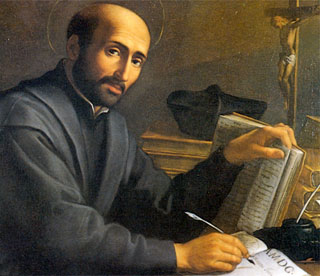
As many Catholic intellectuals/professionals/saints have attested to, the discipline of psychology is not only helpful but essential to constructing a fitting anthropology and properly living out of the truths of Christianity. Though not presented under the language of modern psychology, all of the great spiritual thinkers utilize psychological methodology in their documents on spiritual direction and the formation of souls. Ignatius is a great example. An important part of Ignatian discernment of spirits is determining the originating point of negative thoughts that are the source of a non-spiritual desolation. I think that makes him something of a Catholic Hipster, right Edmund Mitchell?
I write this blog post by way of introduction to a several part series of blog posts I will be presenting on Ignitum Today on the importance of engaging with one’s own psychology and neural processes in order to live a fruitful life in communion with the Trinity (that’s the Father, Son, and Holy Spirit for those of you who are keeping score back home). A redemption “in and through the body” in the words of JP2 includes a redemption of our psychophysical processes and states. Through attempting to understand my own bout with a depressive episode and subsequent healing, I have come to understand and appreciate neurology as an incredibly important and often overlooked aspect of human existence.
Unfortunately, since Catholics are often unwilling to dive into this field, we are losing valuable ground in appropriating a Christian neurology. Everything that is representative of truth (i.e. corresponds to reality) and leads to an authentic human flourishing will ultimately support the existence and revelation of the Creator God who brought the brain into being. Instead, as neurology “discovers” the benefits of mindfulness meditation and prayer for developing peace and compassion, they are quick to associate them with Buddhist or other Eastern transcendental practices when, really, they are much more closely aligned with Christian teaching. The anti-Christian and “spiritual not religion” worldview is hijacking these valuable insights into human lived existence. We could lose the inside track on some of the most compelling evidence for the truth of Christianity.
I invite you to join me in this series as I look into the connection between thoughts and feelings, Christian doctrine as the locus of truth for healing of the brain through cognitive therapy, the formation of God-images, how the brain relates to prayer, and, ultimately, as I propose a tri-partite anthropology of body, mind, and spirit as the proper way to conceptually distinguish the human person. It is this tri-partite person who forms the object of inquiry for both psychologists and spiritual theologians alike.




24 thoughts on “Your Brain and Your Soul Want to Be Besties: An Introduction to Psychology as the Handmaiden of Spirituality”
Pingback: Your Brain and Your Soul Want to Be Besties: An Introduction to Psychology as the Handmaiden of Spirituality CATHOLIC FEAST
Pingback: Are We Re-Crucifying Jesus in the Mass? - BigPulpit.com
With all due respect, Tim, your article is rife with falsehoods and misinformation.
Perhaps writing this series will offer you an opportunity to grow and change – and come to a full realization of the danger posed to the faithful by the falsehoods of contemporary psychology.
The content appears to be snatched from the pop literature of the past twenty years, and lacks a deep and penetrating look at the veracity of those reports.
Psychology and its barbaric cousin psychiatry are the most anti-faith disciplines in the world. They not only put forth a worldview that stands in direct opposition to the tenets of faith, but their membership is most active in tearing down religious freedom – in most cases through their domination of public schools and teachers’ colleges.
One could not find a more active anti-evangelization discipline in the world, so it is ironic that you propose joining their views to ours as part of evangelization.
Hey Greg,
I appreciate your response and your thoughts and, honestly, agree with you for the most part. The worldview and conclusions often drawn from contemporary and psychology are often deeply anti-Christian or, where not as out-and-out malicious, at least misguided.
My question is this: if evangelization has always been done by taking what is good in the culture and showing how it actually points to Jesus Christ, can we hijack the scientific findings of neuroscience to show those who utilize them to develop a materialist worldview in order to show how these findings actually point to a Creator God?
Furthermore, can we as Christians come to understand the way we work as hylemorphic beings more properly through these scientific findings in order to more easily navigate our personal relationship with God. For instance, if someone is struggling with anxiety because of a chemical disposition to do so, will it behoove their spiritual life and decrease their self-doubt to understand the physical basis for their struggle? The tendency to over-spiritualize physical illnesses is a real danger in the spiritual life and can lead to many misguided paths.
My thesis is that much of what we will find in neuroscience will support what the saints like Ignatius and others have been telling us for years. In no way do I fully throw my support behind any school of thought which has arisen from contemporary psychology.
I do not intend on simply re-appropriating articles from pop psychology with a Christian tint. Nevertheless, I do not want to fall into a fideism that disregards the findings of neuroscience per se because of the ways in which people utilize these findings to attack a Christian worldview.
Just like with evolutionary theory, you cannot have proper science without the philosophical background which arises from a Christian worldview. Likewise, without a proper Christian anthropology, you cannot have a proper psychology. However, armed with that anthropology, you can appropriately draw from the rational findings of some of these quite brilliant scientists.
The problem, Tim, is that one cannot take falsehoods regarding the nature of man and from those falsehoods build truth.
The findings of neuroscience have, for the most part, especially in the popular literature from which you draw your article, been bogus. They have presented false information based on biases drawn from philosophical materialism. If you have not done the work to verify the material presented, you simply repeat falsehoods.
The works from which you draw your article represent faulty science – scientism.
So, yes, if one wishes to apply faith and the truths of faith to the world to arrive at a comprehensive worldview – that is a valid project. But one does not mix falsehoods with truth to arrive at a higher truth.
It appears there is a problem, perhaps equally serious, with your views of faith. There seems to be a materialistic bias that causes you to dismiss or denigrate fundamental spiritual truths our true nature. In a sense, this attack on the spiritual nature of the faith arises from the steady drumbeat of philosophical materialism in the culture.
There appears to be a need to agree with the faulty views of the culture in order to be accepted. That is a dangerous path to take.
I understand. I think you misinterpret the article.
John Paul II on the subject, “Only a Christian anthropology, enriched by the contribution of indisputable scientific data, including that of modern psychology and psychiatry, can offer a complete and thus realistic vision of humans.”
That’s all I’m saying.
JP II spoke of “indisputable scientific data.” You have used faulty and very debatable data from the world of scientism, not valid science.
JPII’s admonition to be aware of the culture and aware of valid knowledge did not mean to adopt that which is not only bogus but biased. He did suggest we adopt science whose design is to falsely refute the basis of faith. He did not suggest we adopt the prejudice of materialism.
It is invalid to use his statement to embrace falsehoods and the harmful views of a discipline seeking to destroy faith.
JP II suggested we become aware of these disciplines, not in order to embrace them, but rather to know the role they played within the culture, so we could more accurately address their shortcomings.
I believe your turn toward these bogus studies comes from your lack of experience and knowledge of the more challenging aspects of faith, those one finds in the most diligent and practiced contemplatives, saints, and mystics.
There is nothing in neurology that bears on the existence of the soul, that which we are in essence. There is nothing in neurology that addresses that part of us that is an endowment of the image of God.
There is nothing in neurology that relates to our consciousness or our decisions regarding faith. Neurology simply addresses the switchboard used for the operation of a flesh body. It is solely about structure.
It has nothing to do with the most significant portion of our life – our afterlife. It has nothing to do with our heavenly bodies or glorified bodies.
The studies you reference rely on brain-mind equivalency which is false, and easily disproven. They are studies based on the premise that man is solely a biological entity. They are based on the idea that all our thoughts and beliefs emerge from a biochemical substrata in the brain, which is faulty.
It is, frankly, garbage science. JPII knew that faith would stand up in the light of valid science – and he knew bad science, garbage science, would fold up in the face of faith and reason. For whatever reason, you have chosen to corrupt faith with bogus junk science. Not a worthwhile path.
Hi Tim,
Thanks for your post. I’m another Catholic convert from evangelicalism, and a clinical psychologist with a particular interest in neuroscience and the relationship between brain, mind, and spirit. I’ll be interested in seeing what your thoughts are.
Thanks Philip! Mine is certainly an amateur interest so I will look forward to your critiques. Your favorite comment of mine will begin with, “Actually, Tim, you’re wrong…” 🙂
So what is the relationship? Does a soul have a brain? In the Afterlife do we take our brain with us? Or is the soul or spirit something other than a flesh body?
Is the idea of brain mind equivalency valid? Or have neuroscientists leaped over the question of consciousness – unable to address the question?
Does neuroscience really claim to understand consciousness or do they start with the unproven assumption that consciousness must be an emergent property of the brain and then make unsupported statements about our nature based on this leap over a “no evidence chasm”?
Does consciousness emerge from the activity of brain chemicals? Or is consciousness separate from the brain/body? Can one separate consciousness from the body? Upon death does one separate from the body as a conscious soul? Or is there really no afterlife, no soul, no supernatural or divine reality?
Tim has ripped ideas from the headlines, perhaps without digging deep into the veracity and methodology of the research, and perhaps without the philosophical musing about the meaning of such statements.
Greg, I’ll ask you to wait now until I’ve presented my posts on the various topics of discussion before leveling any more arguments against a work that I have yet to present. In the above post, I have provided an introduction to a series. In this introduction, I have cited no sources and provided only a cursory look into some considerations on the benefits of certain aspects of neuroscience and psychology for understanding ourselves as body and soul.
For a more thorough look into those questions that you’ve posed, I encourage you to look elsewhere. I do not intend to do a complete overview of the Catholic understanding of neuroscience. I’m sure that topic would be better tackled by someone with a PhD or STD following their name. Thomas Aquinas, I believe, also has some considerations on the topic in the Summa.
Though many neuroscientists don’t have the philosophical background to properly process the data they come across, we simply can’t disregard the results of the scientific method totally. Furthermore, some of their findings are helpful for someone hoping to live a richer interior life. That’s all I’m saying.
Your claims are off-base. I’m simply uninterested in your questions. I believe all that the Church teaches and will conduct my inquiry with that in mind. The great minds of the Church like Benedict XVI and John Paul II have all been characterized by the ability to keep in tension the scope of the two methods of God’s self-revealing love: faith and reason.
Your concerns seem fear based and misguided. Clearly you’re an intelligent individual and have thought through these questions at length. In the meantime, before I have even had a chance to present the content of my own philosophical musings, could I ask you to kindly back off? Come see me again when my next article is posted. I look forward from hearing from you then.
To answer your first question, the relationship between body, mind, and spirit is something that I indicated I would be writing a longer article on later. I’ve appreciated John White’s article on Max Scheler’s tripartite anthropology found here…
http://academia.edu/2167455/Max_Schelers_tripartite_anthropology
…for some introductory reading.
The study of the dualistic and tripartite anthropology, along with phenomenology, is vital.
The writings of Paul contribute greatly to the subject, along with the early Church Fathers, the desert Fathers, as well as early theologians, such as Origen.
The study of contemporary science can help – but one must steer clear of unfounded and biased views that are reflected in the discipline of neuroscience and psychology.
Noted. I think that’s fair. I appreciate your insights and will use them in coordinating my study.
Tim, I am happy to await your future articles … hope you see the wisdom of rolling back the ideas in the first piece and debunking some of popular but false claims.
There is no need to look elsewhere for answers to the questions posed – as I have already studied the subject extensively. The questions were posed to generate careful introspection and research.
If you do not intend to be diligent in verifying the research in neuroscience, as it relates to Catholic thought, you might not want to proceed – as you are offering false information. I’m sure that is not what you intend to do.
There is no reason to disregard the scientific method when properly used, but you have referenced pop culture versions of flawed studies – which result from extreme philosophical bias.
Nowhere have I argued against combining faith and reason, or against Church teachings – I have argued against abandoning reason (and faith) and putting forth the bias of cultural philosophical materialism.
My views are not fear based – they are based on a much more in-depth study of this material than you have conducted. My concerns are not misguided – when the faithful are fed false and misleading information, it causes harm to their spiritual journey.
I am sure you do not want to pass along false information that carries with it anti-faith bias that in the long run harms people’s spiritual journey.
Greg, I’m still confused. I haven’t referenced anything in this article. Are you thinking of a different article possibly? Also, can you provide me some sources which debunk neuroscience as a discipline so I don’t have to just take your word for it?
You wrote….
“Instead, as neurology ‘discovers’ the benefits of mindfulness meditation and prayer for developing peace and compassion, they are quick to associate them with Buddhist or other Eastern transcendental practices when, really, they are much more closely aligned with Christian teaching.”
This references a body of popular work based on faulty research. First, neurologists did not come up with mindfulness and then farm it out to the Buddhists. They took the language of Buddhism and then twisted it. The many articles in this area, pretty much without exception, put forth false concepts. Mindfulness has nothing to do with neurology. It has to do with consciousness. It has to do with controlling the mind – which is not the brain.
Consciousness is not an emergent property of the brain. That is perhaps the big falsehood in the path you are taking.
Perhaps your best place to begin in-depth study would be in the area of consciousness studies. (You already started down that path with your reference to phenomenology. This overlaps with mindfulness studies. You will find a lot written on this at the Mind & Life Institute, which is a Buddhist organization, affiliated with some of this research.)
You will find neurology runs aground on the false view that brain = mind. This is s/t not proven by neuroscience – in fact the big names lament the fact that they may never be able to prove this assumption. (They fail to recognize the obvious – it is a false hypothesis.) See consciousness, the “hard problem.”
Brain mind equivalency has been disproven – as you can separate consciousness from the body. (And obviously we believe in an Afterlife, which means our consciousness separates from the flesh body. The neuro folks would deny that is even possible.)
You wrote…
“The anti-Christian and ‘spiritual not religion’ worldview is hijacking these
valuable insights into human lived existence. We could lose the inside
track on some of the most compelling evidence for the truth of
Christianity.”
Not so. The “spiritual but not religious” folks are the psychologists who do not believe in the spirit (thus they cannot really be spiritual) but they claim they are spiritual based on the idea that being spiritual means you are compassionate and nice. They redefine and misuse the term. They are not interested in faith. They aim to destroy it.
They have not hijacked this area, they own it. They made it up. It is false, however. It is a Trojan Horse sent into the Church to destroy.
You wrote…
“I invite you to join me in this series as I look into the connection
between thoughts and feelings, Christian doctrine as the locus of truth for healing of the brain through cognitive therapy, the formation of
God-images, how the brain relates to prayer, …”
There is no need to worry about healing the brain any more than you should worry about healing the pancreas as part of your faith.
The brain is an organ in the body that performs bodily functions. It is a switchboard. It is NOT the locus of thoughts or consciousness.
The brain has nothing to do with Prayer and nothing to do with God, nothing more than the pancreas or your kidneys.
You have stumbled into the minefield of the false representations of philosophical materialism (the foundation of atheism) and are trying to pass off premises and biases that are anti-faith – as if they have a role in faith. They do not.
You have wandered into the labyrinth of the falsehoods of biological determinism that denies the existence of the soul and spirit and denies the existence of the supernatural, denies the existence of God.
My sense is that you ran into a psychiatrist or two, bought their falsehoods on the brain, took their drugs, and now must justify or integrate that experience with your faith.
The problem is that you are way out of your league in this topic and can only pass on falsehoods genned up by those most interested in the demise of the faith – the anti-faith, biological determinist, philosophical materialist psychiatrists who put forth false science (scientism).
You’re walking with the demons here… your choice. You might want to quietly go study this in much greater detail before putting it forth to others in this forum.
Wow, in my 15 years of reading comments on Catholic blogs and website these comments from “GregAut” are probably the most aggressively mean and judgmental I have ever seen. Talk about an ax to grind!
MM, mean? To whom? In what way mean? Please be specific.
The mass drugging of our children with dangerous psychotropic drugs … now that is mean.
Sitting with parents who have lost their child to psychotropic drugs, parents who watched their young daughter go into seizures and die in front of them, that experience, I can tell you personally, speaks to the meanness of a corrupt profession owned and run by Big Pharma.
Meanness is a profession that has totally indoctrinated the teaching profession against faith – so faith has been run out of our schools.
A profession that turns loose gay predators on our school children, bringing our children to falsely believe they are gay and have no control over their lives – that is mean.
A profession that denies the existence of the soul / spirit and seeks to extinguish the light of Christ – now that is mean.
A profession that has transformed an entire culture into believing they are little more than herd animals, such a profession, always for sale to totalitarian governments, is what I would call mean.
A profession that seeks to categorize faith as a delusion that can be diagnosed and treated – that is a mean profession.
A profession that scorches brains with electroshock is mean.
A profession that falsifies research and inundates a society with deception and lies – that is mean.
MM, telling the truth is not mean. Those who insist on aiding the Deceiver are mean, as they lead to the destruction of faith and the destruction of lives.
I am very much looking forward to this series since I have always had a curiosity about this subject but can’t find too much about it in the Catholic media or blogosphere, probably because it’s a touchy subject as you’ve already found. I appreciate taking this on. Please don’t let the naysayers from deter you – there are so many more who seek light on this subject.
MM, it is not a matter of the subject being “touchy” but rather that this field is built on biased premises that stand opposed to faith. Absolutely, we should shed light on the subject, but that light includes illuminating the falsehoods, the biases, and the anti-faith premises at work. The problem I had with the first article is that it passed along falsehoods promoted in the popular culture by those most involved in attacking the faith. One does not shed light by wrapping oneself in the darkness of deception. My responses are not the voice of a naysayer but rather a voice goading Tim to be more diligent in his research and make sure he is not passing along falsehoods. My comments have been warnings to not accept “science” at face value but rather dig deep to discover if it is indeed valid science.
Pingback: Prayer and Psychology Plus How We Can Understand Mental Illness and the Spiritual Life : IgnitumToday